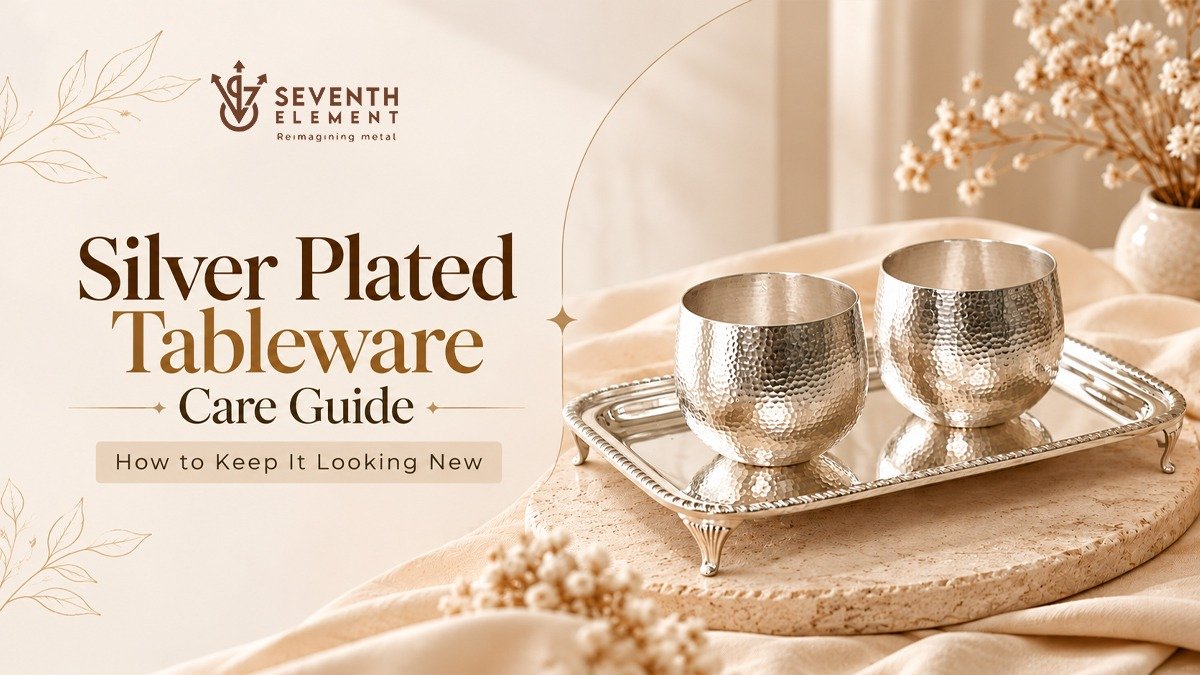
A thin layer of silver gives plated dining pieces their bright finish. The same layer is what makes careful upkeep necessary. Once it wears away, the base metal shows and cleaning cannot correct the damage. Whether used for everyday dining, weddings, hospitality or special occasions, silver-plated tableware needs the right care to maintain its finish and appearance. Regular cleaning, careful handling and proper storage slow the build-up of tarnish and keep surfaces free from marks.
People who want to know how to polish silver plated items without harming the coating will find the method set out below. This blog covers plating, tarnish, cleaning, storage, frequency and professional restoration.
What Is Silver-Plated Tableware?
Silver-plated tableware consists of a base metal, usually brass, copper or nickel silver, covered with a thin deposit of pure silver applied through electroplating. The coating gives each piece the appearance of silver, while the base metal supplies strength and shape. Solid silver differs because the entire item is made from a silver alloy such as sterling, which makes it heavier, costlier and more resistant to wear.
Even so, plated items remain widely used for dining, weddings, gifting and hospitality. Their finish suits formal table settings, and the lower cost allows hotels, caterers and families to buy complete sets in matching designs. Buyers looking for silverware that works equally well at banquets and festive family meals often choose plated ranges for this reason.
Why Does Silver-Plated Tableware Tarnish?
Tarnish is the dark film formed by silver sulphide, which develops when silver comes into contact with sulphur compounds in its environment. Trays and bowls of silver-plated serveware meet these compounds through air and food.
Air carries trace sulphur gases that react slowly with silver and gradually dull the surface.
Moisture and high humidity quicken the reaction and leave spots or streaks on the finish.
Residues of eggs, onions, mustard and mayonnaise contain sulphur that stains the plating if left on.
Improper storage in damp cupboards or uncovered open shelves increases contact with the elements that cause tarnish.
Chemicals and harsh cleaning products can dull the finish or leave marks that polish does not remove.
Frequent handling transfers skin oils and salts, which leave fingerprints that darken over time.
Tarnish does not necessarily mean the item is damaged because it lies on the surface and can usually be removed. Improper cleaning can wear away the plating itself.
How to Clean Silver-Plated Tableware Safely
Plated pieces need a mild routine. The process below applies to how to clean silver plated tableware after regular use.
Step 1- Remove food residue soon after use, since salt and acidic foods begin to mark the finish within hours.
Step 2- Wash with mild dish soap and lukewarm water, as hot water and strong detergents can dull the surface.
Step 3- Clean gently with a soft cloth or non-abrasive sponge, following the direction of any engraved pattern.
Step 4- Make sure to rinse off all the soap residue because it forms a cloudy film when they dry up.
Step 5- Dry immediately with a soft, clean cloth, because water droplets leave spots on the polished surface.
Step 6- Polish when necessary using a suitable silver-plating polish, and follow the care instructions supplied with the product.
How to Remove Tarnish Without Damaging the Silver Plating
Tarnish responds best to light, controlled treatment, and the aim is to lift the discolouration without taking silver away with it.
Tarnish should be removed gently, working on a small area at a time with a soft cloth and light pressure.
Aggressive scrubbing, harsh powders and rough cleaning materials scratch the surface and thin the plating. So they should be avoided.
Chemical dissolvers, which are manufactured especially for silver or silver-plated items, remove tarnish without putting pressure on the surface layer.
Over-polishing should be avoided, because excessive polishing gradually affects the plated surface and may reveal the base metal.
Care recommendations from the silver plated tableware manufacturer should be followed whenever available, as finishes and protective coatings vary between ranges.
What Should You Avoid When Cleaning Silver Plated Tableware?
The checklist below applies to silver utensils handled daily as well as to serving pieces taken out for occasions.
Abrasive scrubbers should not be used, since they scratch the surface and remove silver with each stroke.
Steel wool cuts fine lines into the plating and can expose the base metal underneath.
Harsh chemicals such as bleach and strong cleaners corrode the finish and cause permanent discolouration.
Rough brushes damage engraved details and the edges of decorative patterns.
Excessive polishing removes a small amount of silver with every application, so it should be limited to when tarnish is visible.
Leaving pieces wet invites water spots and speeds up tarnish.
Using the dishwasher incorrectly will lead to the plate being exposed to powerful detergents and high temperatures, which dull the finish and may loosen the joints in hollow-handled knives.
Long-term exposure to moisture promotes tarnish and can eventually corrode the base metal.
How to Store Silver-Plated Tableware
Proper storage becomes especially important for silver dinner sets, where multiple pieces may be stored together and can rub against one another if not protected.
Pieces should be completely dry before storage because trapped moisture leads to spotting and tarnish.
A clean and dry environment away from excessive humidity keeps the finish stable for longer.
Soft protective material, such as anti-tarnish cloth or acid-free tissue, can be placed between pieces where appropriate.
Pieces should be arranged so they do not rub against each other because friction wears the plating.
Silver-plated products should be kept apart from materials that could scratch the surface, including loose metal tools, rough fabrics and rubber that contains sulphur.
How Often Should You Clean Silver-Plated Tableware?
After normal use, plated pieces should be washed the same day, and food residue should not remain on the surface for long periods. Polishing is required only when tarnish becomes visible. Pieces in regular rotation also benefit from a deeper cleaning every few months. Stored items should also be inspected periodically.
The frequency of tarnishing depends on use, storage and environmental conditions such as humidity and air quality. Consistent and gentle silver plated tableware care protects the finish better than aggressive cleaning carried out occasionally.
Tips for Maintaining Silver-Plated Cutlery and Serveware
Each type of piece wears differently. A consistent approach to silver tableware maintenance keeps minor tarnish from becoming permanent.
Spoons and forks should be washed promptly, with attention to the tines and the inside of the bowl where residue collects.
Knives require proper care. One must not soak hollow-handled knives because water can separate the handle from the blade.
Serving bowls used for food containing salt or acid must be washed and dried immediately afterwards.
Trays should be lifted with both hands and wiped along the surface to limit fingerprints and scratches.
Platters should be dried with a soft cloth and stored flat with protective material beneath.
Serving dishes served with lids or decorative edges require a soft cloth to clean slim areas in which water may accumulate.
Frequently handled pieces, particularly silver plated cutlery used at every meal, need regular attention because skin oils and food contact speed up tarnish.
When Should You Consider Professional Cleaning or Restoration?
Home care handles routine tarnish, yet certain conditions call for expert assistance. Heavy tarnishing that no longer responds to gentle polishing, deep scratches, worn plating and surface damage all point towards a specialist. Old, valuable and heirloom pieces warrant professional attention, because improper treatment can reduce both appearance and value, and items that need re-plating cannot be corrected at home.
Professional restoration and plating services may be worth considering if a valuable piece has significant tarnishing, worn plating or surface damage. The professional will be able to inspect both the base metal and the remaining silver before advising the appropriate step to take.
Can Silver-Plated Tableware Be Restored?
Restoration will depend on the condition of the item as well as the material of the base metal. Re-polishing can enhance the appearance of the surface through removal of tarnish and small imperfections. But re-plating can restore silver coverage where the original layer has worn through.
Not every damaged piece can be restored, particularly where corrosion, cracks or structural damage have affected the base metal. A professional assessment is advisable for heavily damaged or valuable items. It also applies equally to a single heirloom or a complete silver dinner set that has lost its finish.
Conclusion
Proper cleaning, gentle handling, immediate drying, correct storage and occasional polishing together determine how long plated pieces keep their finish. When tarnish or wear goes past what home care can address, professional restoration offers a dependable route to recovery.
With the right care and attention, quality silverware collection pieces can retain their character and appearance for years. To explore silver-plated pieces for the table, visit Seventh Element and browse the range.